What if the buildings we create made us feel more at home in the world? We spend a great deal of our lives inside buildings.
They shape our routines, our conversations, the way we gather with friends and family, and how we feel at the end of a long day. Yet we rarely stop to ask what our buildings are doing to us. We tend to talk about architecture in terms of size, cost, function, and appearance. What about how a space makes us feel?
Look around most modern cities and you will see a familiar picture. Concrete boxes, straight lines, sharp corners, and glass towers. There are practical reasons for building this way, of course. But we sometimes wonder whether our collective love affair with the right angle has come at a cost. Have we become so accustomed to these shapes that we have forgotten there are other ways to build?
When we talk about matriarchal architecture, we are talking about a different set of priorities.
We are interested in spaces that feel welcoming, invite connection, and that make room for the human experience. Curves and organic forms are part of this, as are natural materials, and a sense of belonging to the landscape around us. We are not suggesting that straight lines are inherently masculine or that every curved building is somehow matriarchal. We see it more as a way of thinking about architecture, one that puts care, connection, and our relationship with the natural world at the centre of the conversation.
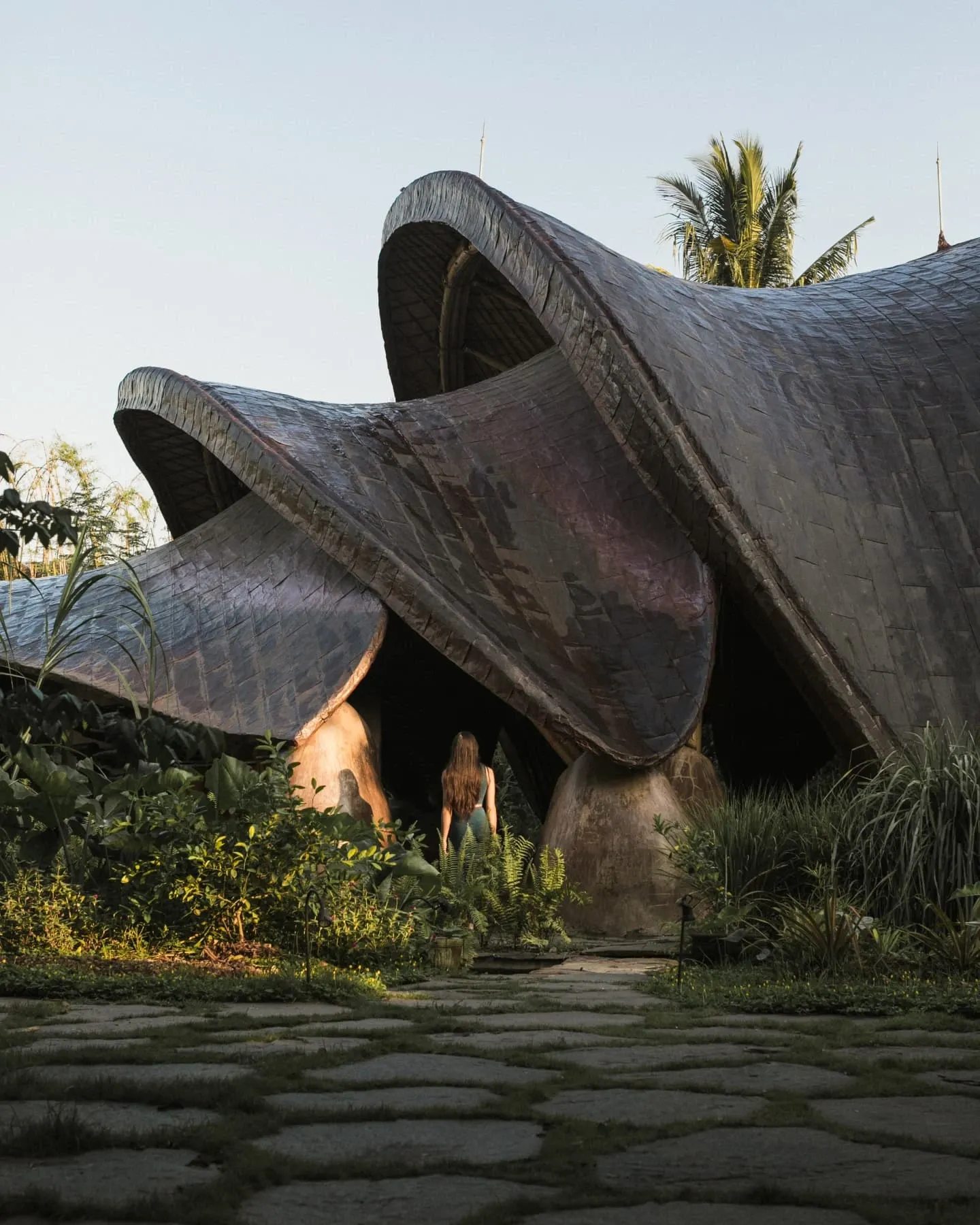
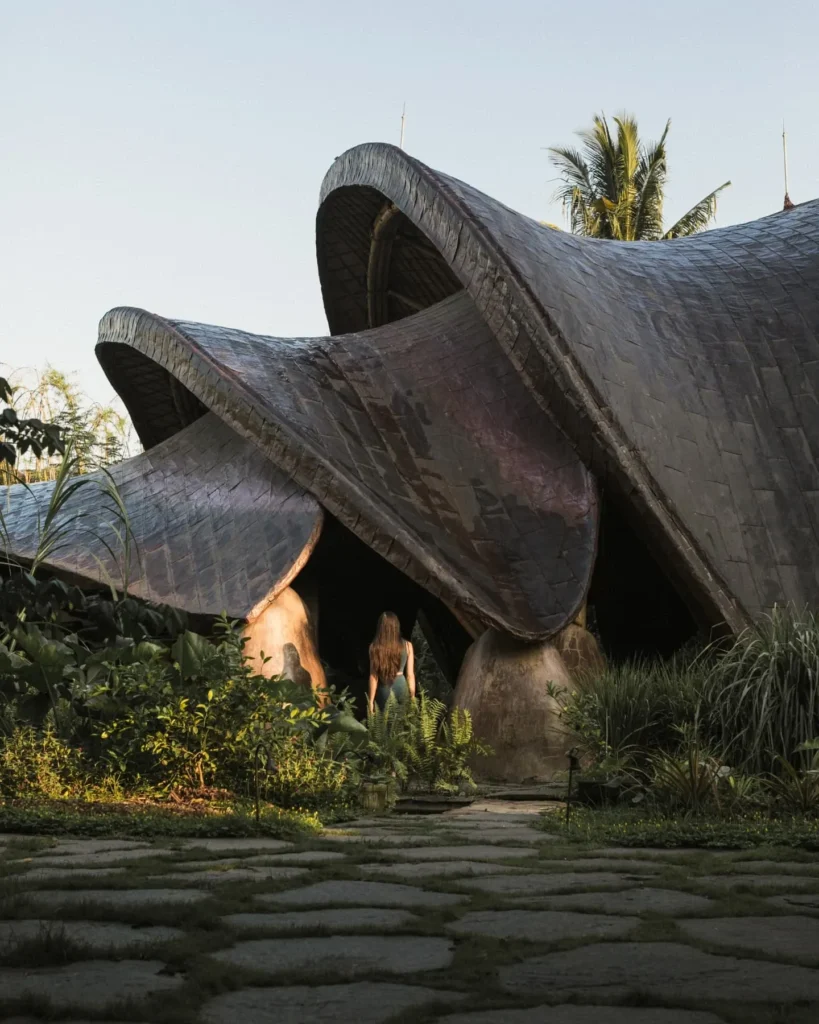
Think about the difference between walking into a room with hard, angular edges, and entering one where the ceiling sweeps overhead, the walls curve around you, and the space seems to flow rather than stop and start. Both rooms might serve the same purpose.
But they can offer very different experiences. We have always been drawn to buildings that make us feel something beyond admiration for their design. We want to feel comfortable in them, stay a little longer, gather people around us, and make memories there. To us, that is an important part of what architecture can do.
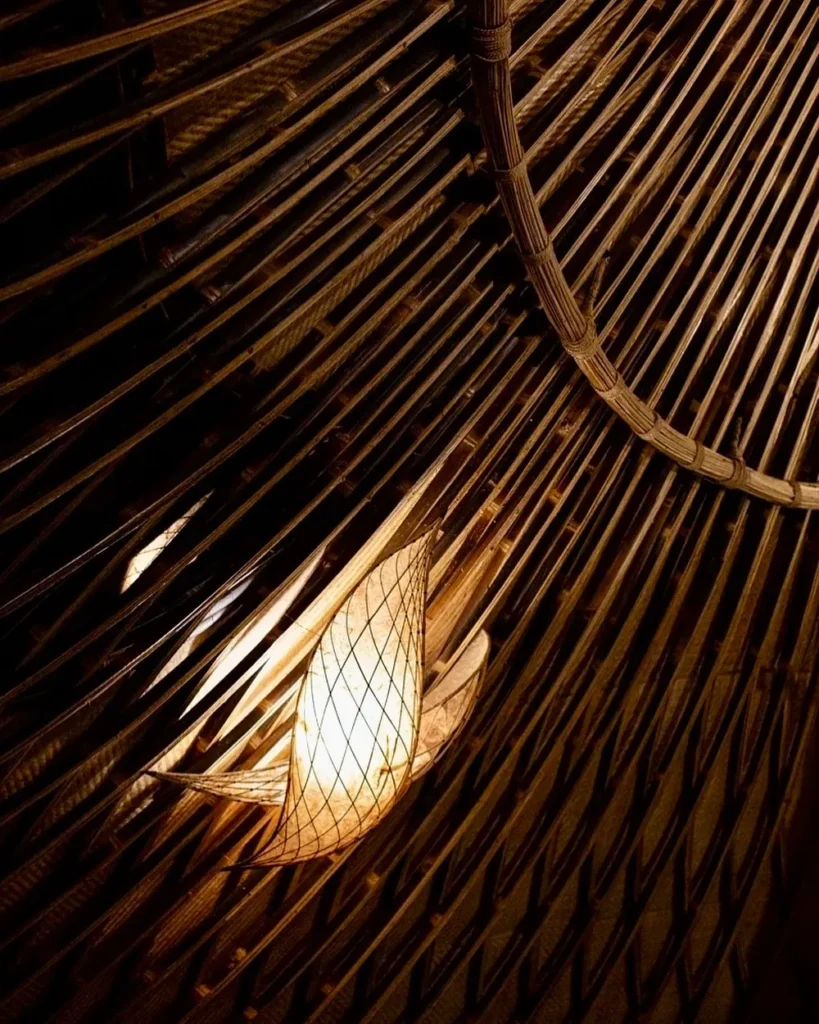
Our preference for curved spaces isn’t purely a matter of personal taste. Research into environmental psychology has explored how people respond to curved and angular forms. Some studies have found that curved interiors receive more favourable aesthetic responses and can be associated with feelings of homeliness and a greater willingness to spend time in a space.
The findings are nuanced. Curves don’t guarantee that a building will feel welcoming, and architecture affects us in many different ways. Light, proportion, materials, temperature, sound, and the way a space is used all play a part. Still, it is interesting to consider how much the shapes around us might influence our experience of a place. We spend so much time discussing what a building looks like from the outside. Perhaps, we should give equal attention to how it feels to inhabit it.
For us, this is where the conversation becomes especially interesting. Architecture is not simply an exercise in putting walls and a roof together. It is about creating the conditions for life to unfold inside a space. The way we build can encourage us to gather, rest, play, work, and connect with one another.
And the materials we choose matter, too. A building made with natural materials can offer a different sensory experience from one dominated by concrete and steel. When those materials are shaped in response to the landscape, the result can feel less like an object placed on a site and more like a part of its surroundings.
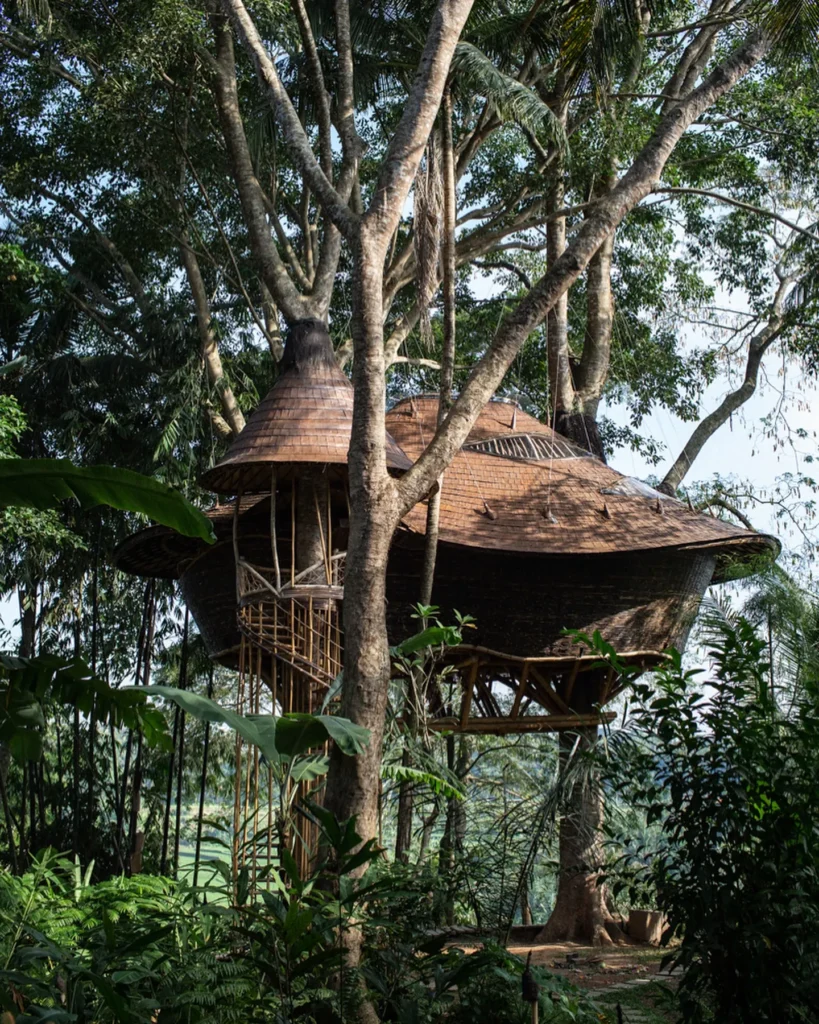
This is one of the reasons we have been drawn to the work of my daughter, Elora Hardy, and the team at IBUKU.
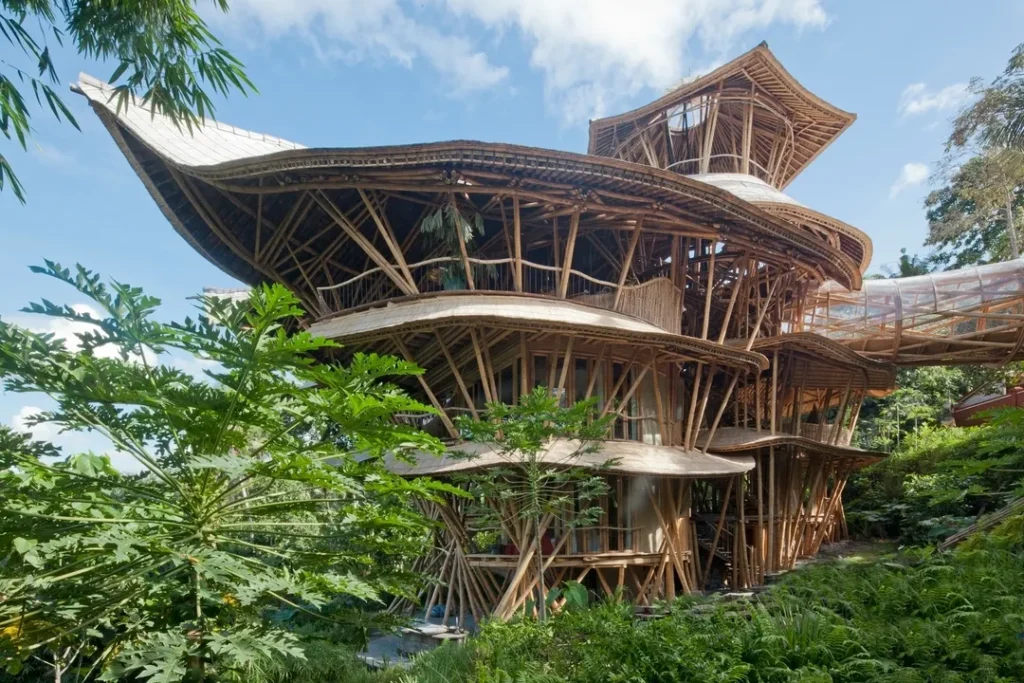
Working primarily with bamboo, IBUKU explores what is possible when a building’s structure evolves beyond conventional grids and right angles. Bamboo’s natural qualities lend themselves to curves, arches, and sweeping forms, while the engineering and craftsmanship give wings to the project.
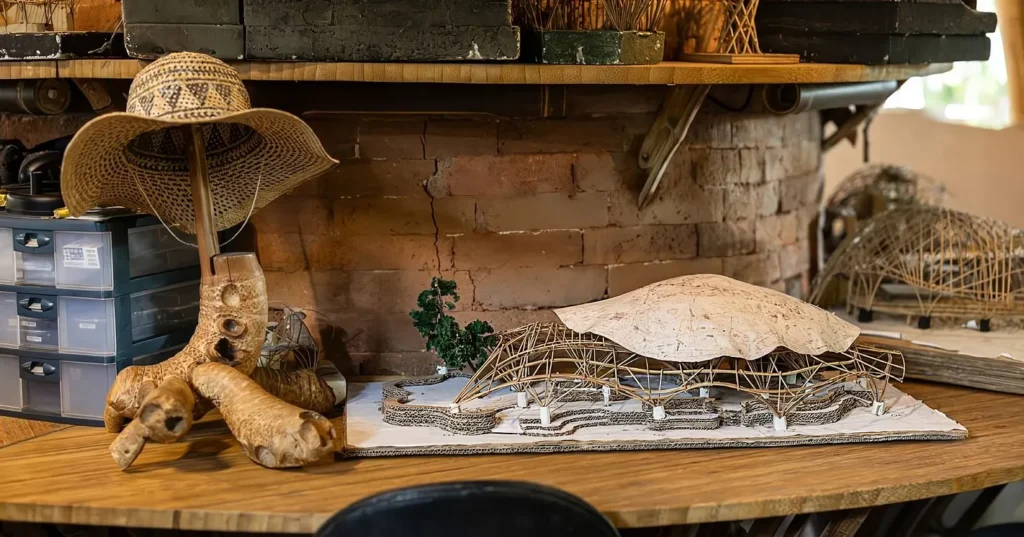
Elora founded IBUKU in 2010, bringing together design, engineering, and Balinese artisanship to explore new possibilities for bamboo and mixed material palette. The team’s work asks us to look at a familiar material differently, considering what it can do when its strength, flexibility and natural form guide the design.
What interests us is not simply that these buildings look different. It is the kind of experience they can create. A curved roof can change the way light enters a room. An open structure can bring the surrounding greenery into view. A building that follows the contours of its setting can change how we experience the boundary between indoors and outdoors.
These choices affect how a space is lived in, not merely how it photographs. They ask us to consider architecture as something we experience with our whole bodies, through the light, the materials, the air, and the people with whom we share it. Of course, bamboo alone doesn’t make a building caring or connected to its surroundings. That depends on the people who design and build it, the decisions they make, and the way the finished space serves those who use it. But bamboo offers possibilities that invite us to think differently about structure, form and our relationship with natural materials.
We keep coming back to the idea of love because it gets to the heart of what we are trying to describe.
Love, in architecture, isn’t a decorative flourish or a sentimental idea added once the practical work is done. It can be present in the decision to create a space where people want to spend time together. In the care taken to understand a material and the decision to work with a landscape rather than disregard it.
It can also mean asking different questions before a building is designed. Who will use this space? How will they feel in it? Will it bring people together? What will it offer the place and community around it? These questions may not always produce a curved wall or an unusual roof. They might lead to a simple building with a generous veranda, a shared table or windows positioned to catch the morning light. For us, matriarchal architecture is ultimately about making room for these priorities.
We don’t believe there is one right way to build, or that every angular building should be replaced with an organic one. But we do think the conversation needs to widen. We can ask more of architecture than efficiency and appearance. We can make space for feeling, connection and care.
Maybe the future of architecture needs a few more curves. And a little more love.