
Canadian-born co-founders of Green School Bali, Bambu Indah, and a growing network of regenerative businesses. They have lived in Bali since 1975 and 1982 respectively. This site is a window into what they are reading, building, visiting, and thinking about.
Arrived in Bali
Founded John Hardy Jewelry
Founded Bambu Indah
Founded Green School Bali
John Hardy was born in Canada. He trained as a silversmith and came to Bali in 1975, settling in Ubud when it was still a small artists’ village. He spent years working alongside local Balinese craftspeople, learning their methods and building relationships that would define the rest of his work.
In 1989, he founded John Hardy Jewelry. What started as a small workshop in Ubud grew into a global brand distributed across more than 40 countries. The pieces were handmade in Bali using traditional techniques. John sold his stake in the company in 2007.
Cynthia Hardy grew up in Canada and began making jewelry as a teenager. After graduating from the University of California, she moved to Bali in 1982. She built her own jewelry practice over the following years before joining the John Hardy brand. For nearly two decades, she was central to the company’s design direction and international growth.
In 2006, John and Cynthia watched Al Gore’s film An Inconvenient Truth. It shifted their thinking. Their daughters had been homeschooled in the jungles of Bali, and no existing school felt right. So they decided to build one. In August 2006, they committed to the project. Green School Bali opened in September 2008 on a campus built almost entirely from bamboo, on the banks of the Ayung River in Ubud. The main structure, known as the Heart of School, was at the time the largest bamboo building in the world.
The school now enrols over 700 students from more than 40 countries. Campuses inspired by the Bali model have since opened in New Zealand, South Africa, and Tulum.
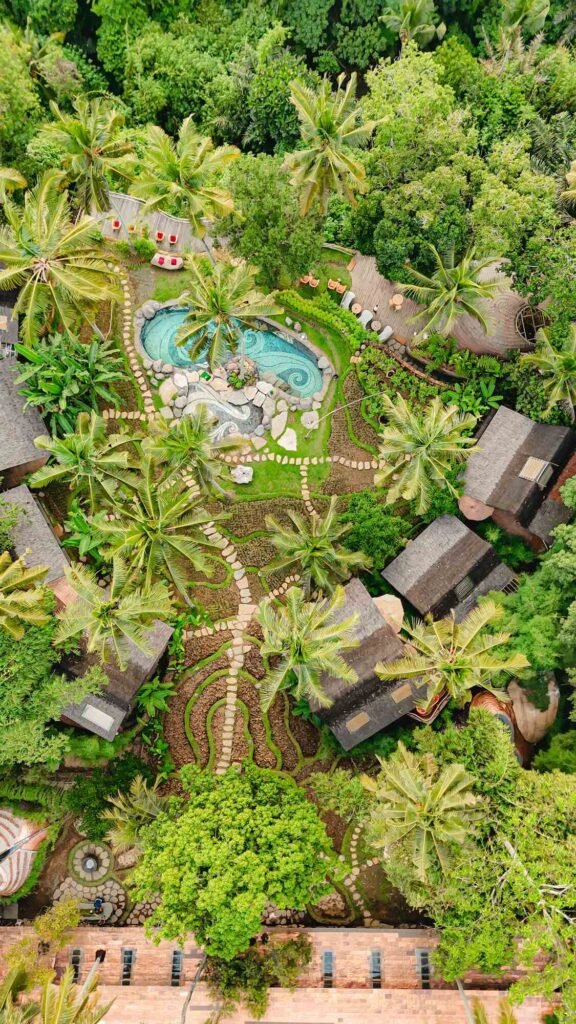
In the early 2000s, a plot of land adjacent to the Hardy home in Sayan came up for sale. They bought it to prevent a conventional hotel from being built there. With no clear plan, they sourced a collection of antique Javanese joglo homes from Java. A craftsman from Java relocated and restored the structures on the riverbank above the Ayung River.
The Neiman Marcus buyers came to stay. Word spread. What began as an extension of their home became Bambu Indah, a boutique hotel that opened formally in 2010. The property has grown in stages since. In July 2024, nine additional renovated antique teak rooms were added alongside four bamboo nests. Tembaga, a restaurant focused on fire-cooked, anti-inflammatory food using produce from the estate and local growers, opened at the same time. Tangan, a boutique on site, carries objects and textiles selected by Cynthia.
John and Cynthia have four children. Their daughter, Elora Hardy, founded IBUKU, a bamboo architecture and design studio based in Bali. IBUKU has built structures across Bali and internationally, including several buildings at Green School. Their son, Orin Hardy, runs BambooU, a hands-on bamboo building school, as well as Bamboo Pure, The Kul Kul Farm, and ChopValue Bali. Their daughters, Chiara and Carina, work in the arts and design fields, respectively.
The family’s businesses share common ground in craft, material, and place. Most are based within a few kilometres of each other in Ubud and Sayan.
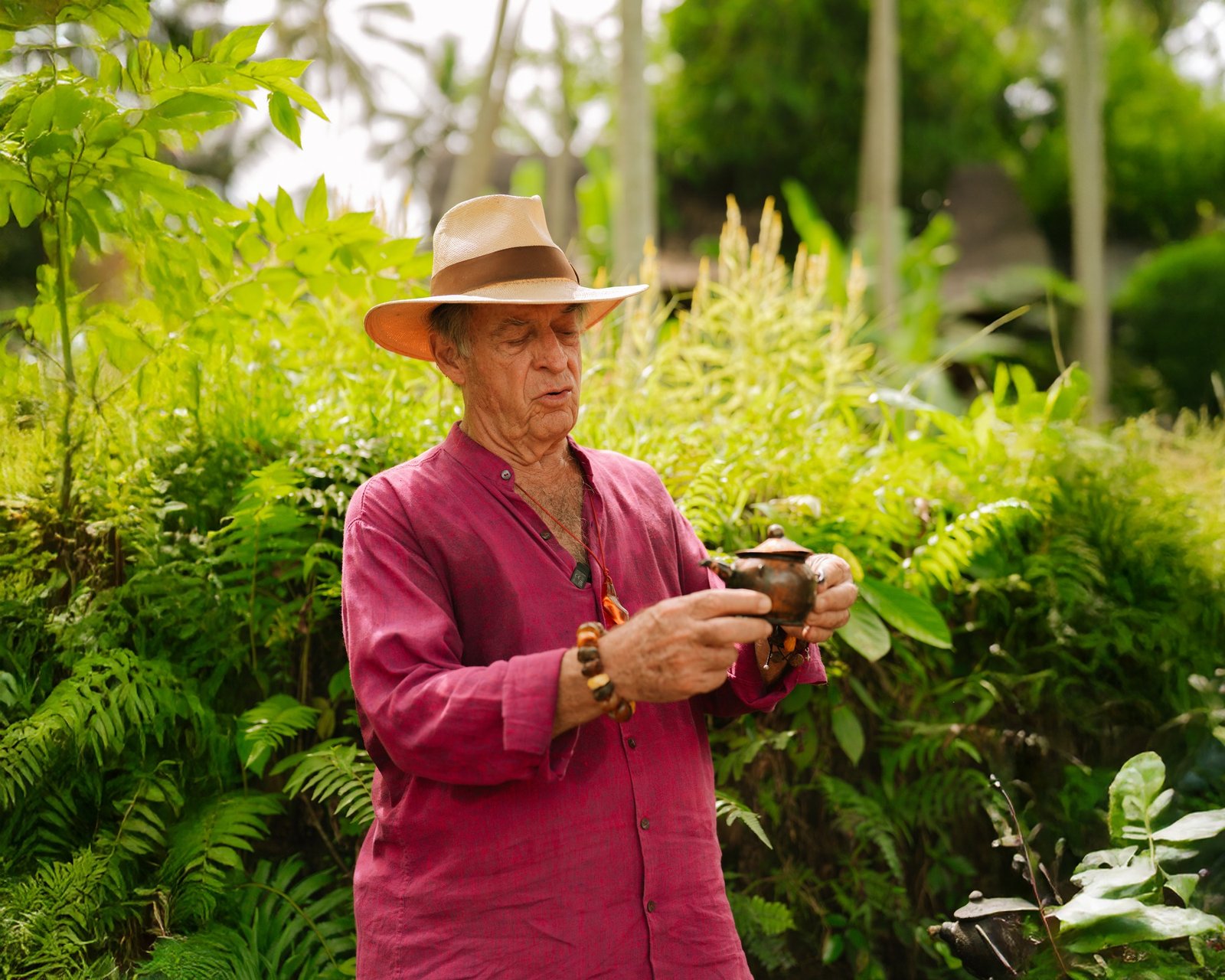
John grew up in Canada and has described himself as a dyslexic thinker who learned early to build teams around the skills he did not have. That pattern has held across everything he has built since. He does not manage from a distance. He is present on sites, in workshops, and in conversations with craftspeople, farmers, and educators.
He has spoken at more than 30 international events, including TED. His talks focus on bamboo as a building material, regenerative approaches to education, and the value of building with what a place naturally produces. He travels regularly and documents what he finds in architecture, food systems, land use, and craft. That documentation feeds directly into this site.
John collaborates closely with his children on several active business projects across Bali. He remains involved in Green School and Bambu Indah, and works with Elora and Orin on the development of new ideas within the Hardy network.
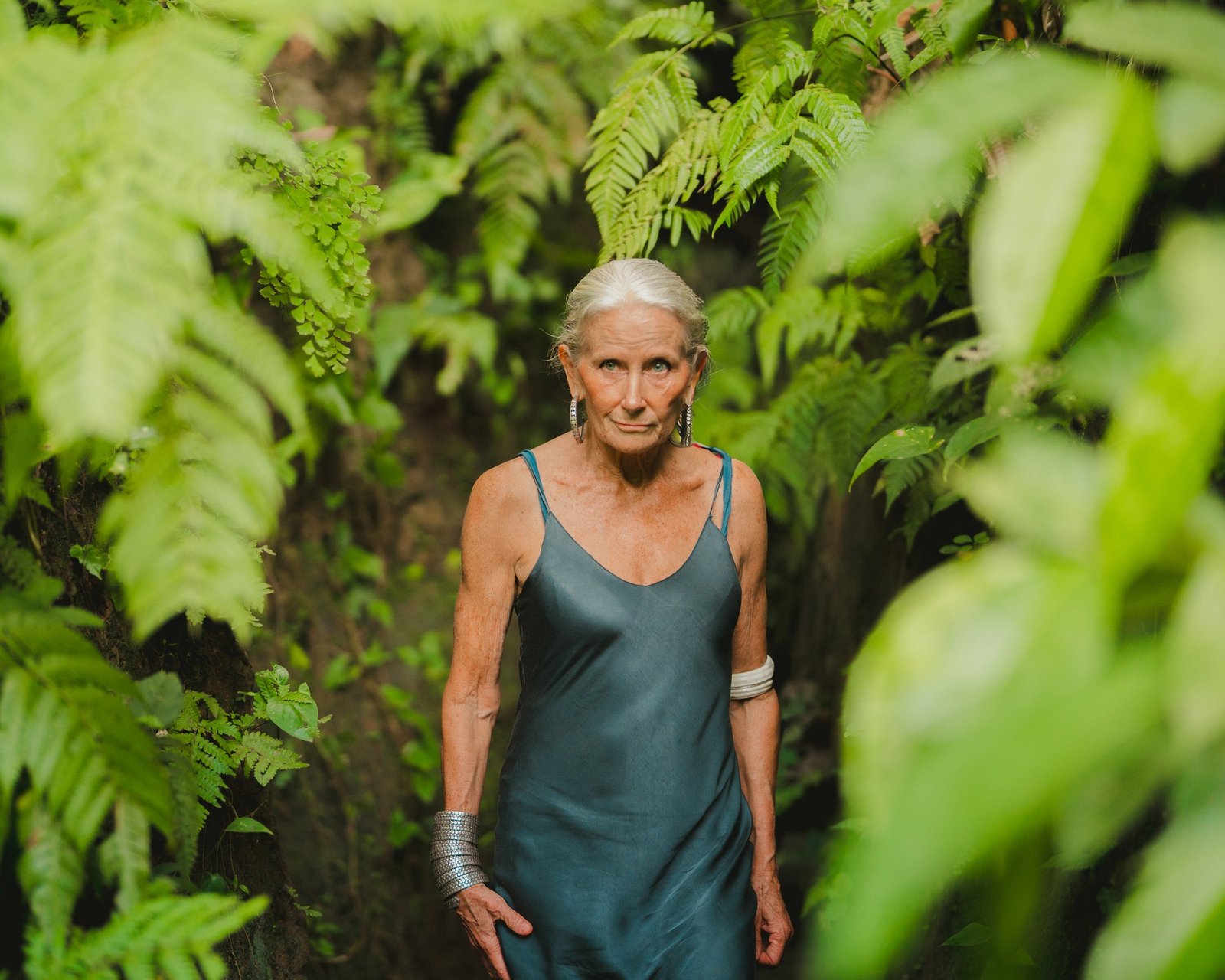
Cynthia began making jewelry as a teenager. Her eye for design and her ability to execute complex projects with precision became the operational backbone of the John Hardy brand. After graduating from the University of California, she moved to Bali in 1982, and spent the next two decades helping grow the jewelry business while raising four children in Ubud.
Her role across the Hardy projects has consistently centred on design, material, and the practical execution of large ideas. She was instrumental in the development of Bambu Indah, including the sourcing and restoration of the antique Javanese homes that form the hotel’s original structure. She selected the copper bathtubs, the textiles, and the objects that give the property its character. Tangan, the boutique on site, reflects her ongoing practice of collecting and curating objects from travels across Asia and beyond.
Cynthia travels with John and contributes directly to the curation of what appears on this site. Her perspective on food, design, and how places are made runs through much of what Green by John and Cynthia shares.
These are not stated principles. They are patterns that show up in their work, across jewelry, the school, the hotel, and the businesses their children run. They emerge from interviews, from the site they have maintained since 2009, and from the work itself.
They are worth stating plainly because they explain why the projects look the way they do and why this site covers what it covers.
Bamboo grows across Bali and across Southeast Asia. It can be harvested in three to five years and grows back without replanting. Green School, IBUKU, BambooU, and Bambu Indah all start from this material fact. The choice of bamboo is not aesthetic. It is geographic and practical.
Every major Hardy project has been built with Balinese and Javanese craftspeople who carry knowledge that does not exist in manuals. John arrived in Bali in 1975 and spent years learning from local silversmiths before starting a business. That pattern of apprenticeship before enterprise has continued across the projects.
Conservation holds things as they are. Regeneration restores function. The farm at Kul Kul grows food. The bamboo plantations at Bambu Pure replant faster than they harvest. Green School teaches children to understand systems, not just to protect them. The distinction matters in practice.
John has maintained a public blog since 2009. Cynthia has been sharing what she reads and collects for just as long. Green by John and Cynthia is a continuation of that habit. What they find useful, surprising, or worth understanding is posted here for anyone who wants it.
Green by John & Cynthia is a curated record of what John and Cynthia are reading, building, visiting, and thinking about. It covers regenerative business, bamboo architecture, food, travel, and the projects of their family across Bali and beyond.
It is not a news site. It is not a brand platform. It is a personal reference, shared openly. The content reflects what John and Cynthia find worth paying attention to, built from over 50 years of living and working in Bali.
Where they have been and what they found there. Architecture, food, farming, craft, and land use observed firsthand.
Books, films, and ideas worth following. Curated from John and Cynthia’s own reading, viewing, and conversations.
Updates on Green School, Bambu Indah, the family projects, and anything else worth noting as it happens.