Can you live a life without generating waste from your kitchen, garden, and everyday needs? Yes, you can.
Walk through a forest in Ubud’s ecological treasure trove, Sayan, after heavy rain and look down.
Leaves decay underfoot and soften into damp soil. Fungi thread through the bark. Spiraling networks do the magic of breaking down tough fibers into rich humus. This humus is crumbly in texture and left behind after plants and animal waste fully decompose. Nowhere in this silent forest will you find a trash bin or burn pile or landfill.
Nature refuses to understand the concept of garbage. Every output is an input. Every end in this cycle of life feeds a new beginning.
Modern human design forgot this basic law somewhere along the line. Mankind’s marathon for quick success built a linear world.
Extract a raw material. Process it into a single product. Use it once. Throw the rest away as waste. Restart the process.
People are taught to take the sweet fruit and throw away the peel. Harvest the crop and burn stalks. Chop down trees for timber and leave piles of sawdust to rot or smoke in open fires.
Where does all this waste go? It’s most often burnt, and the residue is inhaled by humans and animals, and then left to coat or block natural aeration for living organisms.
But decades of living in sync with nature’s blessings and resources helped us unlearn this linear habit at Bambu Indah.
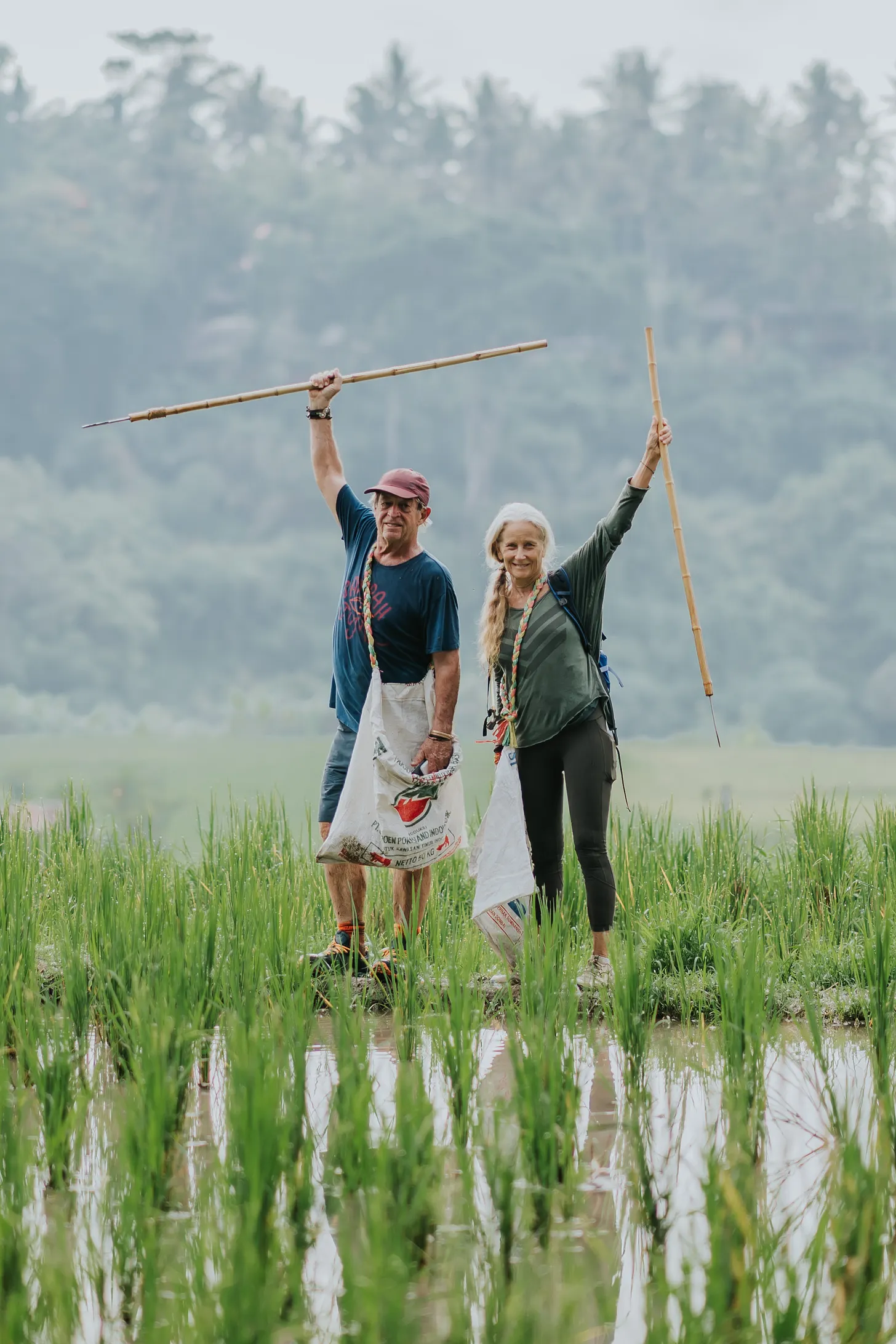
My family and I, along with a tightly knit team of nature advocates, spent months building alongside living ecosystems in Bali.
It took us little time to realise that genuine luxury had nothing to do with synthetic perfection or endless convenience. What we resonated with was harmony. About observing how natural systems functioned. This inspired us to design human spaces that fit right back into them.
The Geometry of the Plant
You can look closely at a single stalk of bamboo to understand zero-waste design.
An industrial factory views bamboo as a commodity to be flattened, sliced, chemically glued, and turned into boring, uniform pieces. But if you hold a raw culm of Dendrocalamus asper (Petung bamboo) in your hands, you quickly see how nature and “uniform” don’t go hand in hand.
The bottom base of the pole is thick-walled, heavy, and immensely strong. The middle section gives long, straight fibres with phenomenal tensile flexibility. The top naturally tapers into slender branches.
Think about it. You’ll fail if you try to force the entire pole for a single job. But if you listen to the material mindfully, every millimetre’s purpose will start to reveal itself.
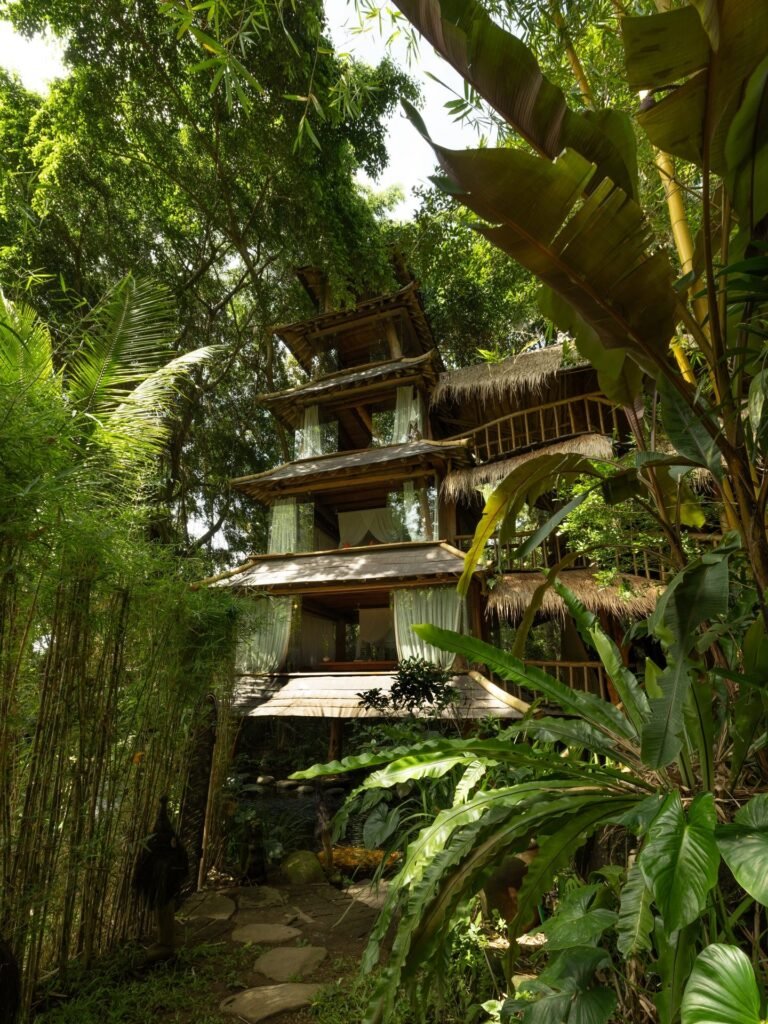
We formed load-bearing columns to hold up open-air pavilions from the heavy base.
We split the middle trunk longitudinally into strips to become structural rafters for woven floor mats or curving roof arches.
What’s more, the slender tops and branches are merged in unison for light-filtering ceiling lattices and eco-lampshades.
We don’t toss leftover offcuts either. Our architectural etiquette gives us reason to char this in low-oxygen kilns to make biochar. This porous carbon filter does well at cleaning greywater and upping soil health.
All in all, I believe that when you design with the whole plant in mind, you stop generating waste and start generating possibilities.
The Sapi Pavilion and Antique Gladaks
This logic is materialised across Bambu Indah.
When we built the Sapi Pavilion, we didn’t start with a CAD file and try to bend nature to our will.
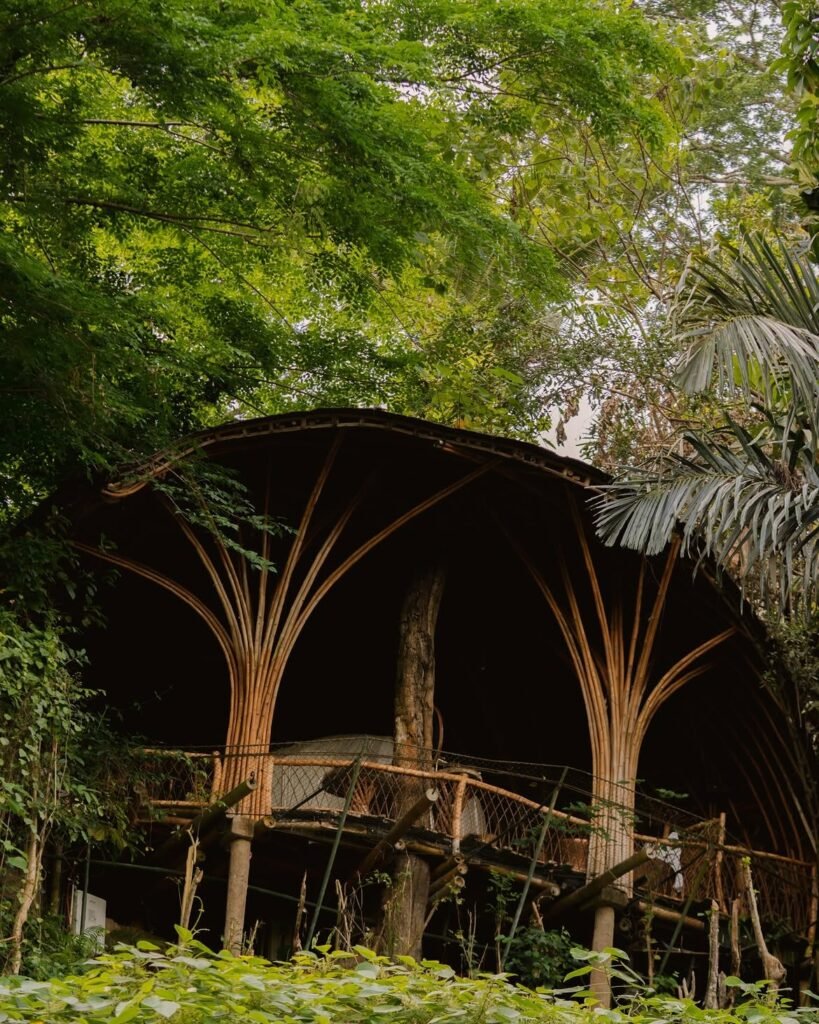
My daughter, Elora, brought in her incredible bamboo work from IBUKU. The pavilion’s soaring roofline follows the natural flex and curve of heavy Petung bamboo poles. We laid out an open-geometry structure to let cross-breezes from the Ayung River valley sweep through naturally.
Right beside these new bamboo structures sit our restored Javanese gladaks. These are century-old teak houses we rescued from old farming villages in Java. We reassembled these tearing, ageing teak frames wood-for-wood and gave them another life by anchoring them to river stone foundations.
You also won’t find poured concrete or asphalt underneath the path connecting these houses.
Concrete seals the earth. Water gets restricted from free flow, leaving groundwater tables devoid of recharge.
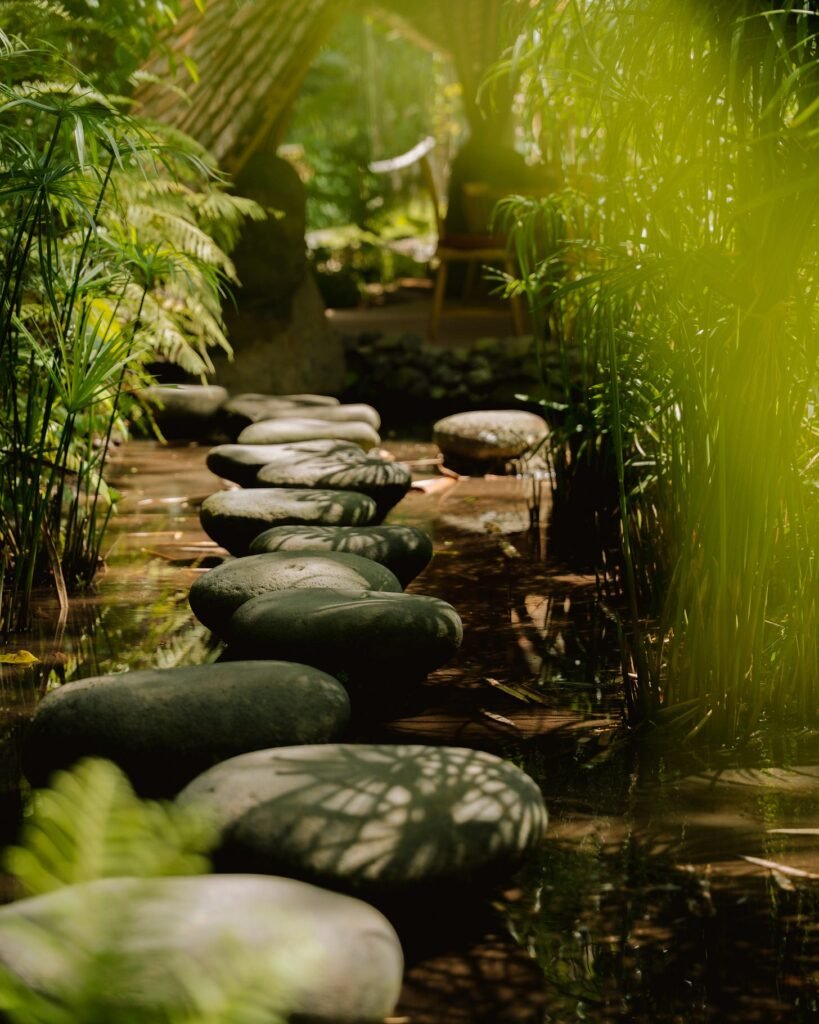
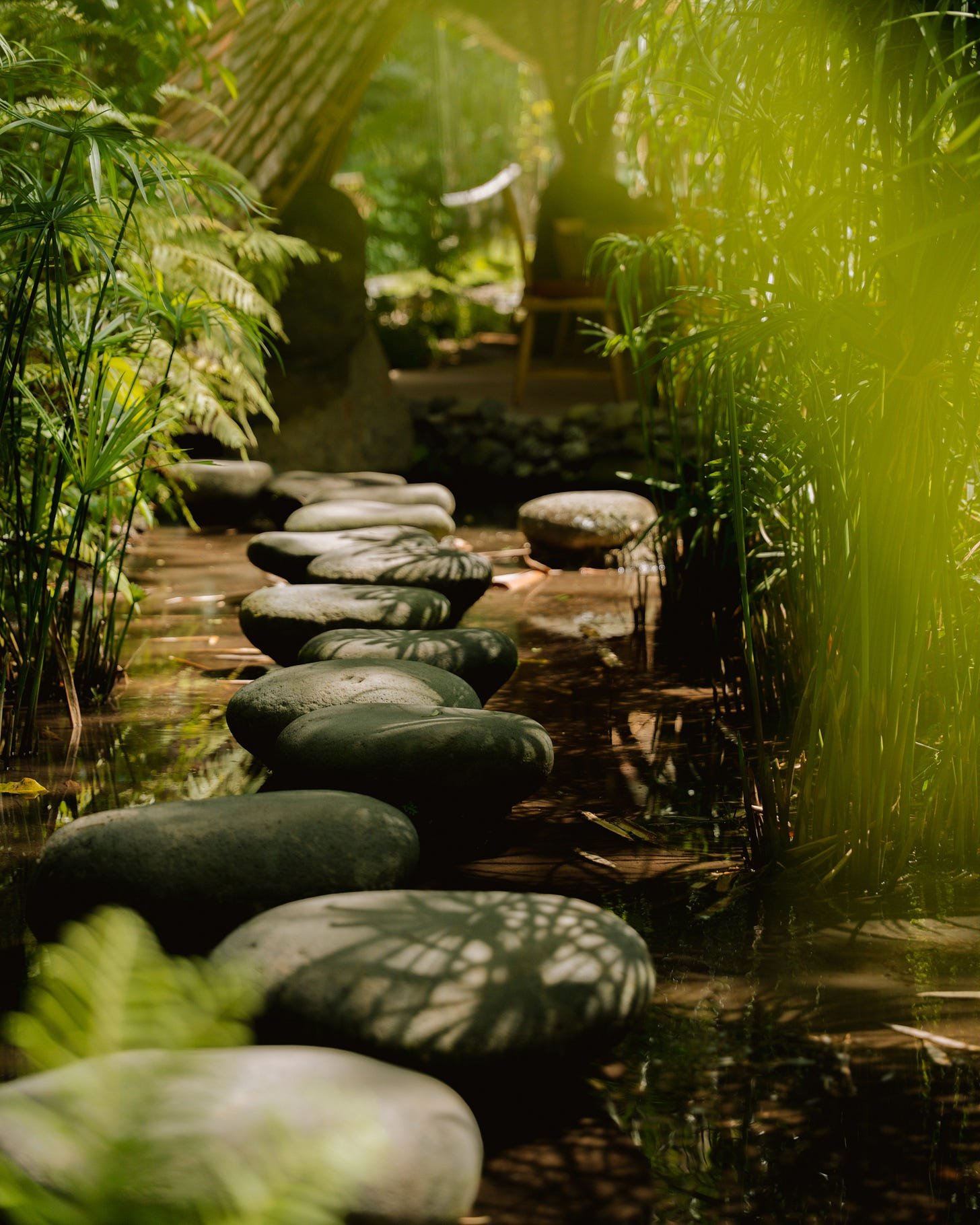
Every path at Bambu Indah is graced with river stones and volcanic gravel kept together by natural soil. So when torrential tropical rains fall, the water filters straight back into the local aquifer without any soil erosion or runoff wastage.
A Living Ecosystem on the Plate
We carried this mindset from bamboo architecture into our kitchen at The Long Table, the communal heart of Bambu Indah.
In conventional restaurants, almost 1/3 of the food brought through the back door ends up in the bin. Stems are discarded, and skins are peeled off before being thrown away. Excess cooked food is scraped into trash bags at night.
We refuse to give the idea of wastage a chance. On the contrary, we look at ingredients through the same eyes as our building materials.
Take a simple jackfruit tree growing near the riverbank. The ripe, sweet fruit becomes dessert. The young, unripened fruit is savoury, making it great for a slow simmer into plant-based curries.
Even the large seeds are roasted or boiled for a nutty staple similar to chestnuts. Any leftover fibrous outer rind goes right into the compost pile or feeds our livestock.
What comes from the earth returns to the earth.
Our sister permaculture site, Kul Kul Farm, founded by Orin Hardy and Maria Farrugia, sits just down the road. This is where our closed loop comes full circle.
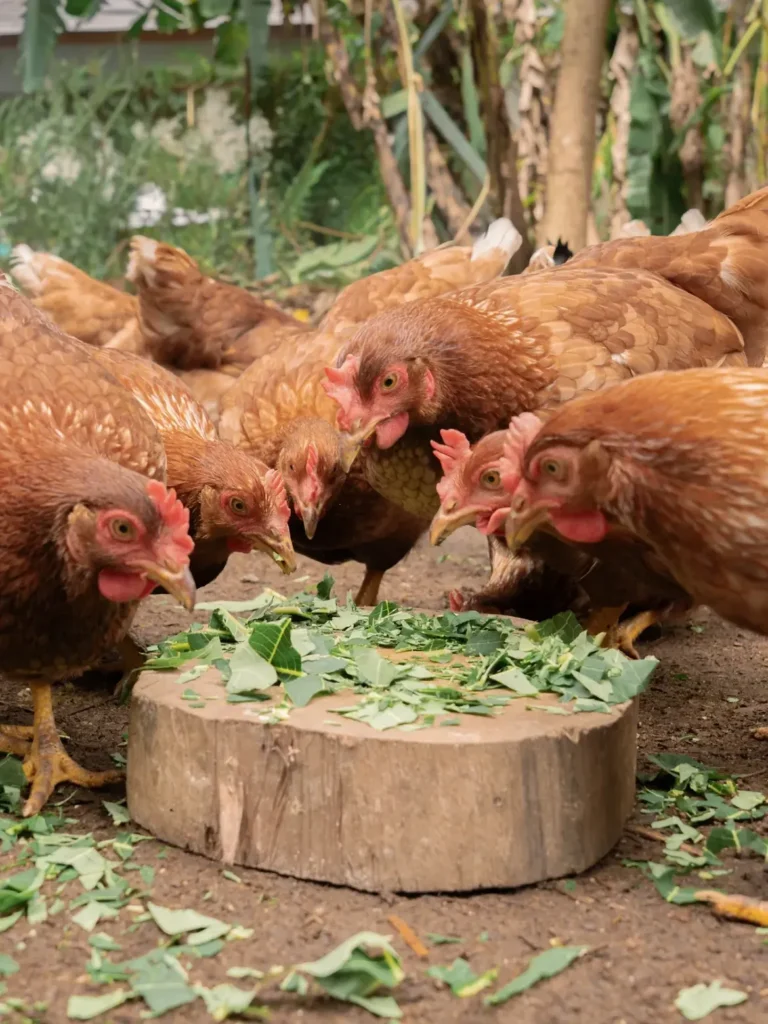
Kitchen scraps from Bambu Indah are fed to the farm’s chickens. If not, they are put into active compost beds. Black soldier fly larvae munch on this organic food waste to create high-protein feed for fish. The nutrient-heavy compost eventually hits the vegetable beds again to grow heirloom greens, chilli peppers, and lemongrass.
Expanding the Circle Beyond Our Riverbank
You may think the real challenge of our time is finding new resources. But in reality, it’s about learning to honour what we already have.
We want to avoid alienating ourselves from the physical world. The intent is to take the time to figure out how an offcut, a discarded stem, food scrap, or natural waste can be reused. Once we find answers, potential becomes much easier to trust in.
Nature has spent four billion years perfecting circular systems. Nothing is rushed, nothing is excess, and nothing is wasted.
The next time you prepare food or prune your garden, take a minute or two before discarding anything.
Ask yourself, “What else can this become?”
If you enjoyed reading this, subscribe to Green by John. We’ll share what we’re exploring, reading, building, and discovering as we go.